
Gran Colozuela
A look into the Colombia and Venezuela of the Garden

“Look at him!”, said Sofia, watching her grandson Alejandro wolf down his fifth arepa, “This cochino pequeño can’t get enough!”
Her neighbor Francisco looked on with amusement, as he only wished he had that kind of food when he was Alejandro’s age.
Having this many arepas was a pipe dream in the Venezuela of Francisco’s youth. And despite the playful dig at her grandson, Sofia looked on with the same amusement. For she had a happy, stable, and safe life to provide her baby, something that would have been unthinkable in the Colombia of her youth as well.
Both were raised during exceptionally difficult times, in a troubled era that came to be known as the Density. And they carried the deep scars of their respective homelands in their DNA. Scars that penetrated directly to the soul and imprinted themselves upon a people, a continent, and a world.
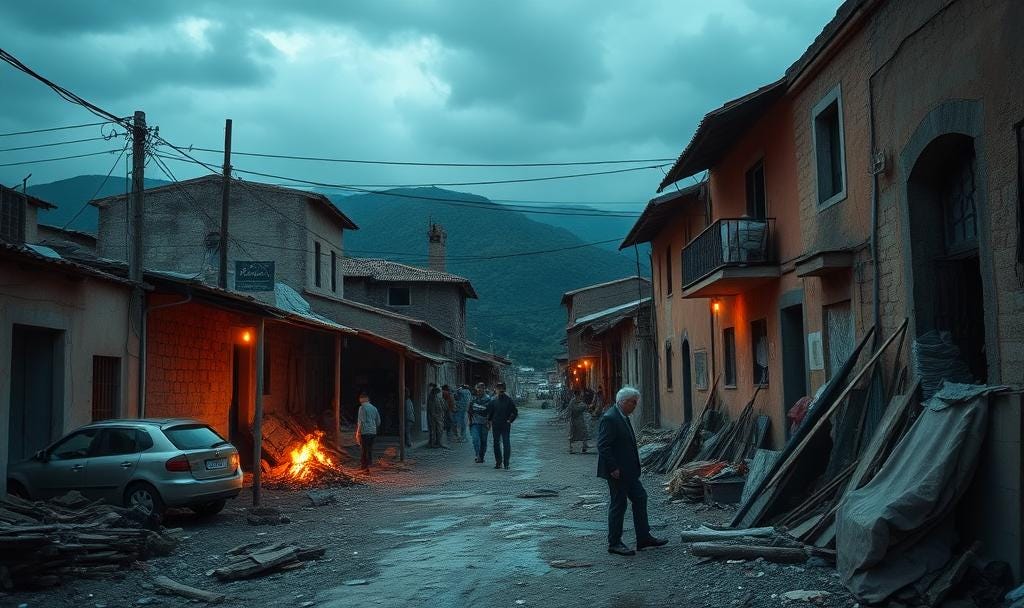
The Colombia of Sofia’s upbringing was one plagued by extreme violence, corruption and fear. A functional narco-state for years, the prospect of something better for its people was dim and seemingly unattainable.
Likewise, the Venezuela of Francisco’s formative years, a generation later, was plagued with demons of its own. Political repression, widespread poverty, and a luminous people’s spirit crushed under the yoke of tyranny.
The people of both lands, once united by the purpose of liberation from colonial rule, fell into division over tribal and governmental systems, but, two centuries later, were reunited in pain.
Until the day that changed everything.
The day when Sofia met Mauricio.
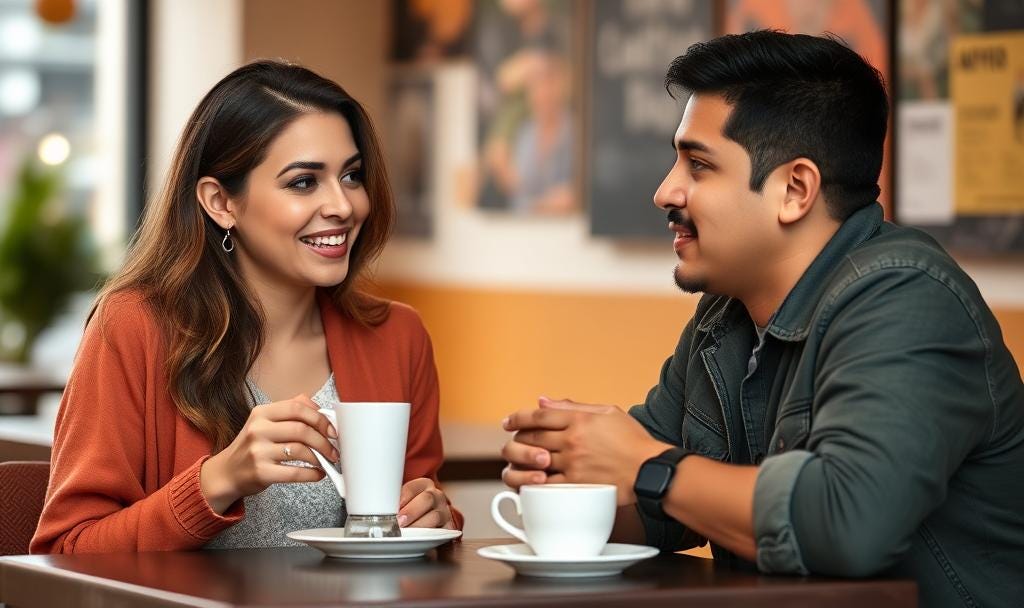
It was a chance meeting at a cafe in Buenos Aires, where Sofia was studying abroad and Mauricio was living as a writer and political refugee from Caracas.
The cafe was packed, and Sofia, normally wary about inviting strange men to join her, saw a kindness in the eyes of Mauricio as he was looking for somewhere to sit with his coffee. So she extended an invitation to join her, and they immediately hit it off.
They talked about where they were from, their families, and what ultimately brought them both to Buenos Aires.
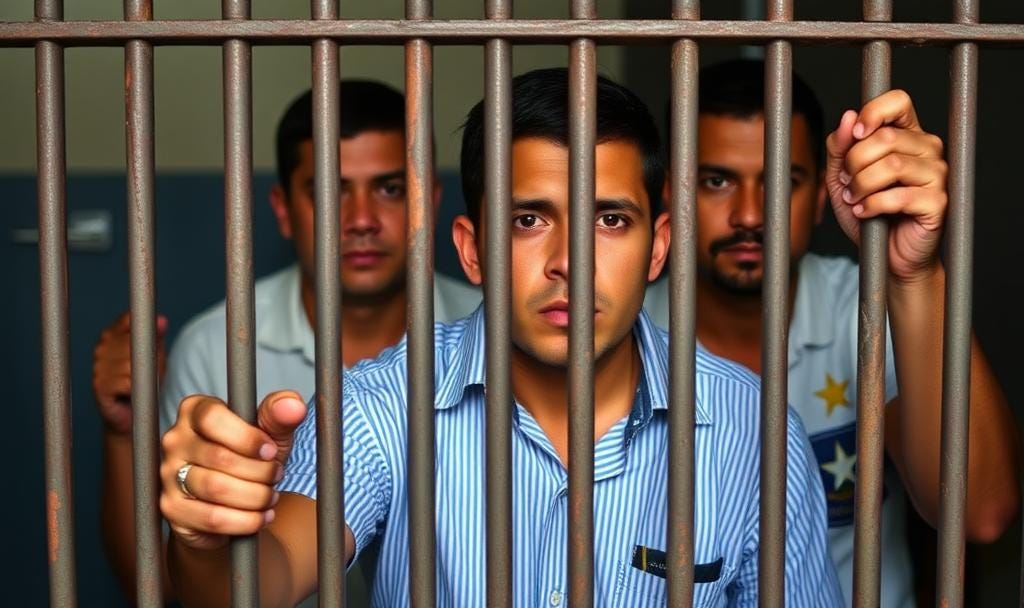
Mauricio’s father and two of his siblings had been jailed for speaking out against the regime, and he was part of a Venezuelan community of expats in Argentina who organized to propose a new vision for his homeland.
Sofia was studying economics, hoping to make a difference when she returned home to make sure every Colombian had a chance to achieve their dreams without having to do so abroad, as so many in her family had done for decades.
Naturally, they also exchanged banter over whose country had the better arepas, with neither giving an inch.
Sofia and Mauricio exchanged numbers after their coffee, and met the following week at the same place.
At the next meeting, both took the journey that set it all in motion. The journey from what was, into the realm of what could be.
Referencing the “La Gran Colombia” political union that both nations were once a part of, they started playing in a future of “Gran Colozuela”, where the two peoples could unite in purpose.
Indeed, what would life look like on the other side of pain?
This idea gave birth to a column, blog, and eventual social media content empire called, naturally, “Gran Colozuela”.
The content was less a critique over the troubled states of both nations, and more focused on real visions about what they both would look like in a place of healing and progress.
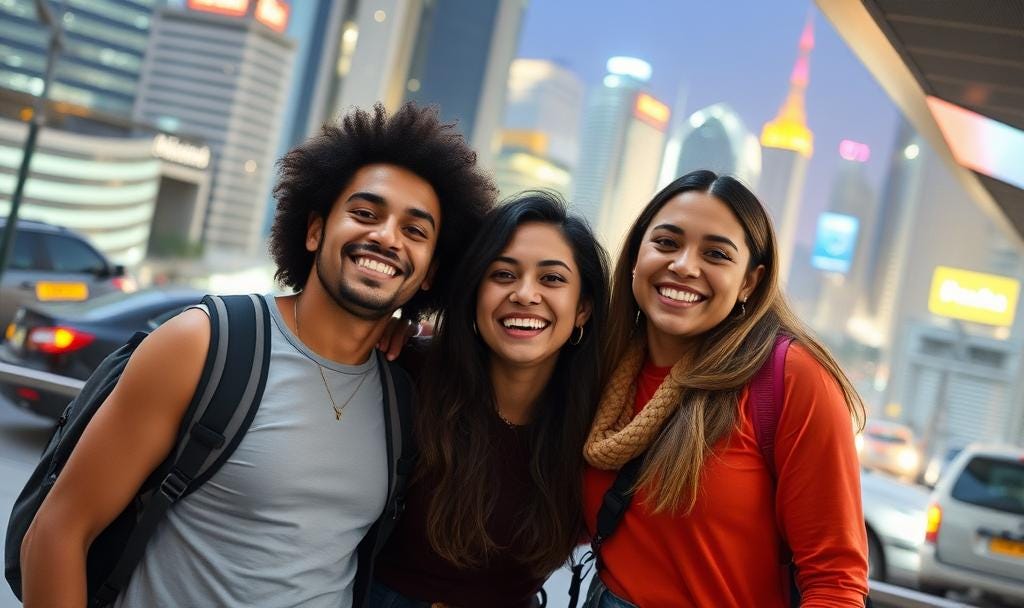
Every article and video ended with the same question to the viewers and readers:
Who would you be in Gran Colozuela, and how can you be that person today?
As both were realists, they knew that shouting from the rooftops wouldn’t undo generations of struggle, strife and deeply-entrenched social pathologies. But they also knew of the human heart’s capacity to grow. To dream. To aspire. And to make incremental changes towards the state of being it desired.
This movement became popular among both Colombian and Venezuelan expats, and eventually found its way to the people of both nations themselves.
Rather than a movement of protest, it became a movement of individual empowerment.
People started performing small acts of kindness, self-development and visionary work, anchoring it into the movement and the hashtag of #GranColozuela.
Despite the name, this was not a movement towards a political union, as that experiment already failed and there was no appetite for round two, but rather, a spiritual union.
One where each population would wrestle back control of their destiny, with their neighbors along for the journey at their side.
Each #GranColozuela post inspired another. And the energy behind the movement eventually grew so powerful, that no force, governmental or criminal, was able to stem its tide.
The people of both nations declared, through this movement, that the era of suffering was over. That the power of hope was going to win over the power of fear. And it was their right to claim something better.
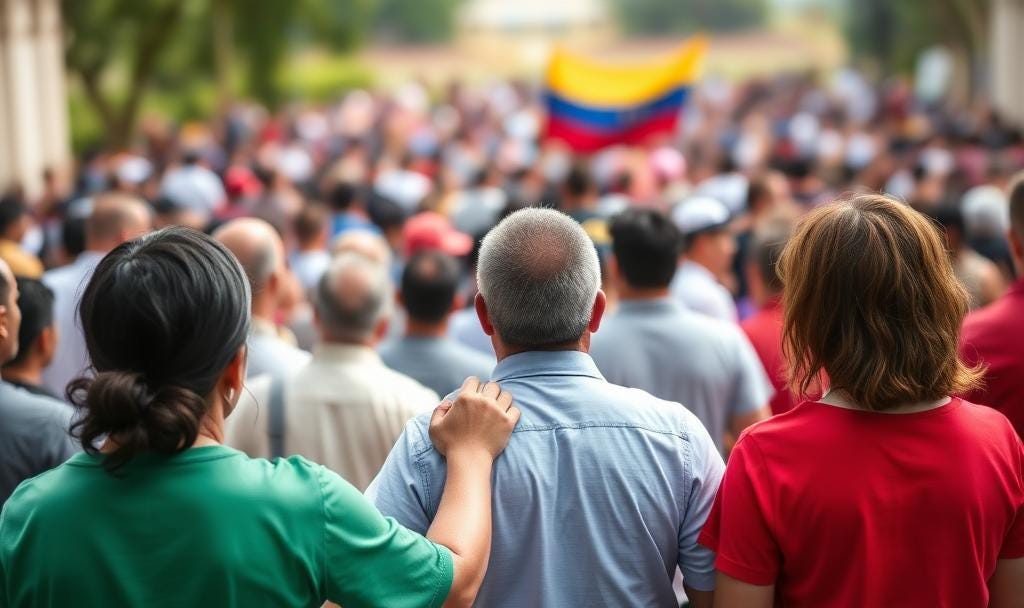
Within a generation, Gran Colozuela went from an online movement to the driving ethos of both peoples. It ushered in a sweeping wave of reforms, partnering with one another and others from around the globe to stem violence, increase social trust, open communications and deliver the promise of a future that could be achieved in every city, town and village throughout both nations.
It was a paradigm shift that threw out the old narratives of us vs them, and embraced the driving force of us working with us.
Observers from around the globe traveled to South America to witness the Gran Colozuela miracle for themselves, and see how they could model this movement back within their own troubled nations.
Sofia and Mauricio eventually returned to their home nations, remaining in touch as dear friends even as both eventually got married to others and had families of their own.
Mauricio became a folk hero once the regime in Venezuela fell, but refused calls to run for President in favor of continuing to grow the movement organically. He wasn’t interested in setting policy; he was focused on continuing to change hearts. Mauricio knew that the best way to prevent a repressive regime from ever emerging again was a nation fully empowered in purpose and prosperity. One where everyone had a seat at the table and were driven to create something better. Mauricio continued this work with every ounce of his being until the day he finally passed.
Back in Colombia, Sofia would go on to become the nation’s Minister of Economics, creating the “Silicon Rainforest” investment and innovation hub which turned Colombia into one of the global leaders in technology. The GDP of the average Colombian, within a generation, surpassed the GDP of the average Canadian, and its streets were among the safest in the world. Sofia helped transform her nation into one of the great marvels of humanity, a story of what was possible if only you had the courage to dream it so.
And as she fed her insatiable grandson his sixth arepa, she couldn’t help but smile while enjoying this beautiful afternoon with her dear friend Francisco, who was Venezuela’s ambassador to Colombia.
“He loves those arepas, doesn’t he?”, Francisco noted with a smile.
“Yes he does”, she said, “Because like I always used to tell your father, ours are the best.”
________________________
Geoff Woliner is the author of the Path to Perfectia series, the journey of a soul family from the Density into the Garden of Tomorrow.